
Looking for the best mobile crypto wallets in 2025? We've tested and reviewed them for you.
Crypto wallets are a great way to secure your crypto assets while enabling access to the entire realm of the crypto industry, from decentralized exchanges and NFT marketplaces to Web3 games and more.
But, they are not all the same. Crypto wallets can be hot or cold, custodial or non-custodial, support only one or multiple networks, etc. Let's find out the differences and present the 10 best crypto wallets to use in 2025!
Key Takeaways About the Best Crypto Wallets
- Crypto wallets are a perfect avenue to tap into decentralized exchanges, buy crypto via third parties, and securely store NFTs and other Web3 assets
- Hardware wallets are the perfect tools in your crypto toolbelt to keep your assets secure and accessible
- The most popular online crypto wallets include MetaMask, Coinbase Wallet, and Trust Wallet, while the most used hardware wallets are Trezor and Ledger
- CoinTracking integrates with the best crypto wallets, enabling investors to easily track their trades, from DeFi to NFTs, in just a few clicks.
Overview of the Best Crypto Wallets
| Crypto Wallet | Hot or Cold | Staking Support | Fees | KYC |
|---|---|---|---|---|
| Trust Wallet | Hot | Yes | Transaction fees | Not required |
| MetaMask | Hot | Yes | 0.875% fee for swaps | Not required* |
| Crypto.com DeFi Wallet | Hot | Yes | Maker fees (0.0% to 0.75%); Taker fees (0.05% to 0.75%); Other fees (e.g., credit cards) | Required |
| Exodus Wallet | Hot | Yes | Transaction fees | Not Required |
| Coinbase Wallet | Hot | Yes | 1% on swaps; commissions on staking, and network fees apply | Required |
| Electrum Wallet | Hot | No | Transaction/network fees | Not Required |
| Phantom Wallet | Hot | Yes | 0.1% fee for transactions | Not Required |
| Wallet of Satoshi | Hot | No | 1% (receiving); 1.95% (sending) | Not Required |
| Trezor | Cold | Yes | Transaction/network fees | Not Required |
| Ledger | Cold | Yes | Transaction fees | Not Required* |
*Wallet creation and usage does not require KYC but third-parties may require it.
What is the Best Crypto Wallet?
Here's a quick list of the top crypto wallets this year:
- Trust Wallet
- MetaMask
- Crypto.com DeFi Wallet
- Exodus Wallet
- Coinbase Wallet
- Electrum Wallet
- Phantom Wallet
- Wallet of Satoshi
- Trezor
- Ledger
Trust Wallet
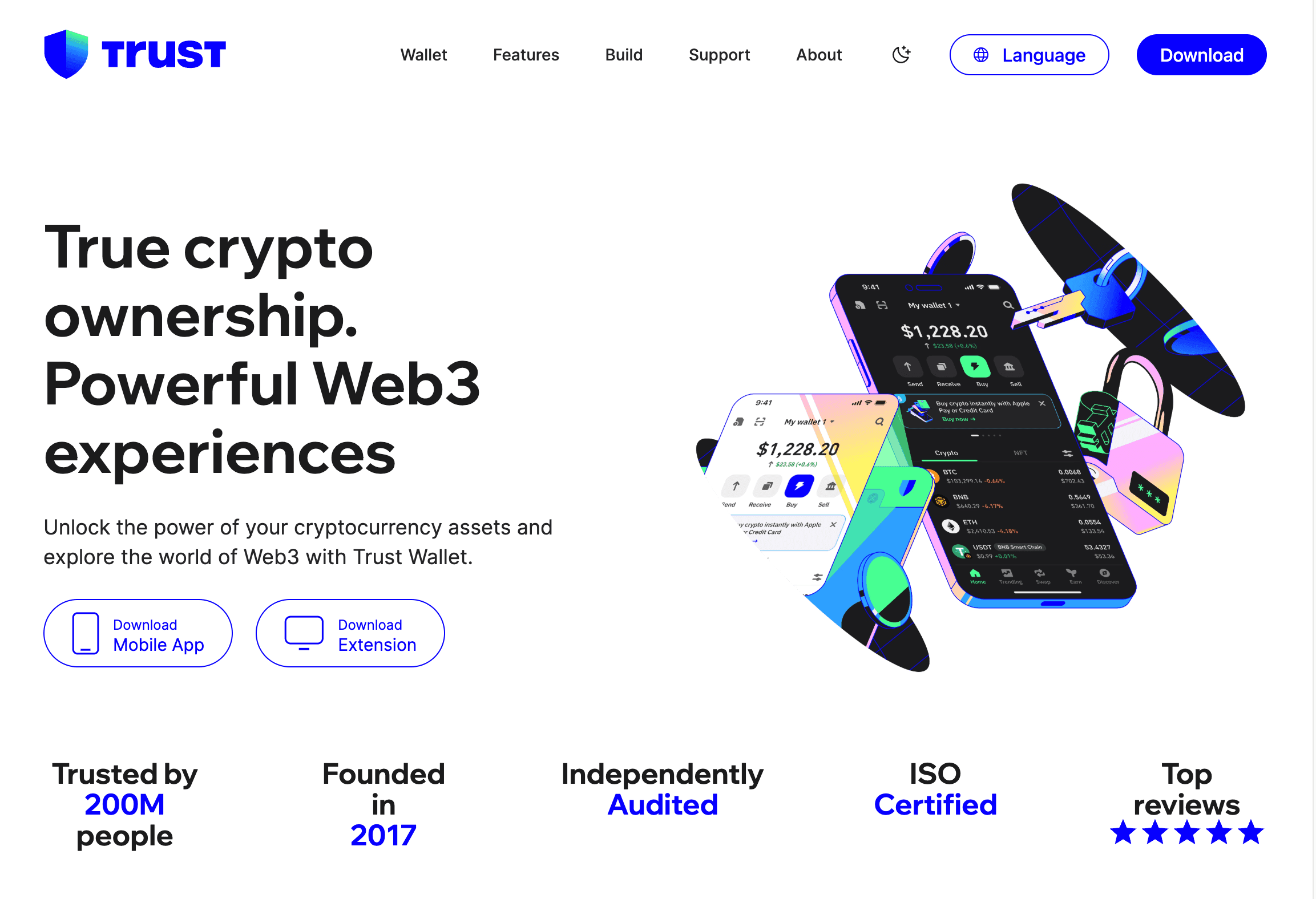
- Assets Supported: Supports 100+ blockchains, supporting more than 10 million assets
- Hot or Cold: Hot Wallet
- Cost: Free to use; transaction fees apply
Top Features
- One of the most popular and trusted non-custodial wallets
- Supports millions of assets across 100+ networks
- High security (self-custodial model)
- Available as a desktop app, browser extension, and mobile app
- Compatible with hardware wallets like Ledger and Trezor
| Pros | Cons |
|---|---|
| UX-friendly | Hot wallet (less secure) |
| Supports millions of assets and 100+ networks | Staking supported and additional features via third parties |
| One of the most trusted and widely used online wallets | |
| App and browser extension available |
MetaMask

- Assets Supported: Dozens of supported blockchains, with thousands of tokens, NFTs, and games available.
- Hot or Cold: Hot wallet
- Cost: Free to use; 0.875% flat fee for swaps
Top Features
- Access to thousands of assets across networks
- Focused on Ethereum and EVM chains
- Easily swap cryptocurrencies within MetaMask
- Spend crypto via MetaMask card
- Access the world of blockchain applications, from DeFi to Web3 and NFTs
- Advanced features via Snaps
- Earn rewards from staking
- Safely store crypto assets and data
| Pros | Cons |
|---|---|
| The most widely used crypto wallet globally | Swap fee |
| Supports thousands of assets across major networks | Staking supported and additional features via third parties |
| Buy crypto, earn rewards, spend crypto, and send/trade tokens | |
| Available as an app |
Crypto.com DeFi Wallet
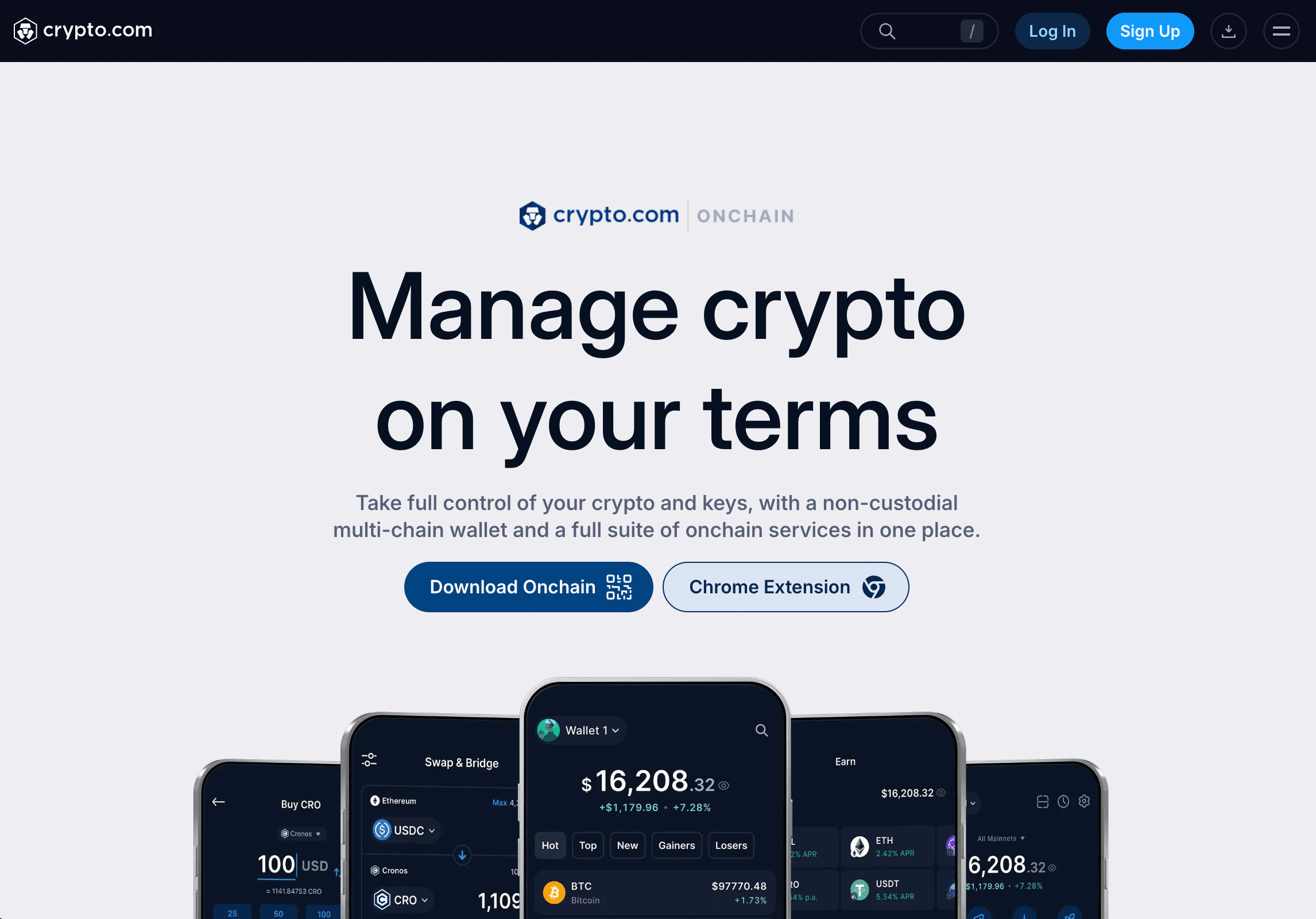
- Assets Supported: 36 chains supported, including Solana, Ethereum, and others.
- Hot or Cold: Hot wallet
- Cost: Maker fees (0.0% to 0.75%); Taker fees (0.05% to 0.75%); and other fees apply (e.g., credit cards)
Top Features
- Supports 35+ networks across thousands of assets
- Access to the Crypto.com ecosystem
- Built-in features, from staking to buying crypto
- Secure crypto wallet from a major player: Crypto.com
| Pros | Cons |
|---|---|
| Supports 35+ networks, including Solana | KYC required |
| Tap into the Crypto.com/CRO ecosystem easily | Several types of fees depending on usage |
| Many features available that are associated with the Crypto.com product suite | |
| Highly secure, non-custodial wallet | |
| Available as an app and browser extension | |
| Access to NFT, dApps, and staking |
Exodus Wallet
- Assets Supported: 50+ blockchain networks supported, translating into millions of assets
- Hot or Cold: Hot wallet
- Cost: Network/Transaction fees may apply
Top Features
- Access to 50+ blockchain networks, millions of assets
- Enterprise features available
- Wide functionality, from staking to crypto purchases and swaps
- Secure and well-established crypto wallet
| Pros | Cons |
|---|---|
| Top networks like Bitcoin, Ethereum, Base, Solana, and more | Not as many features as other popular wallets |
| Integration with Ledger and Trezor | Additional features like staking available |
| Highly secure, non-custodial wallet | |
| App and browser extension |
Your Crypto Portfolio Manager
Capture and import your crypto data securely and automatically for accurate tax reporting and effortless portfolio tracking.
Coinbase Wallet
- Assets Supported: Ethereum and EVM-compatible chains (e.g., Avalanche C-Chain and Polygon), enabling access to thousands of assets
- Hot or Cold: Hot wallet
- Cost: 1% fee on swaps; 35% base commission on staking (varies by user status and asset); and network/transactions fees apply
Top Features
- Designed for Ethereum and EVM-focused investors
- Ability to tap into the Coinbase ecosystem
- Supports a wide variety of tokens, including NFTs
- Staking available
- Developed by one of the most reputable companies in the crypto space
| Pros | Cons |
|---|---|
| Great for Ethereum and EVM-based chains | High fees |
| Trusted brand in the crypto space | KYC required due to being a centralized exchange (US-based) |
| Staking rewards available | |
| Tap into the Coinbase ecosystem and the DeFi world | |
| Top security (self-custody) | |
| App and browser extension |
Electrum Wallet
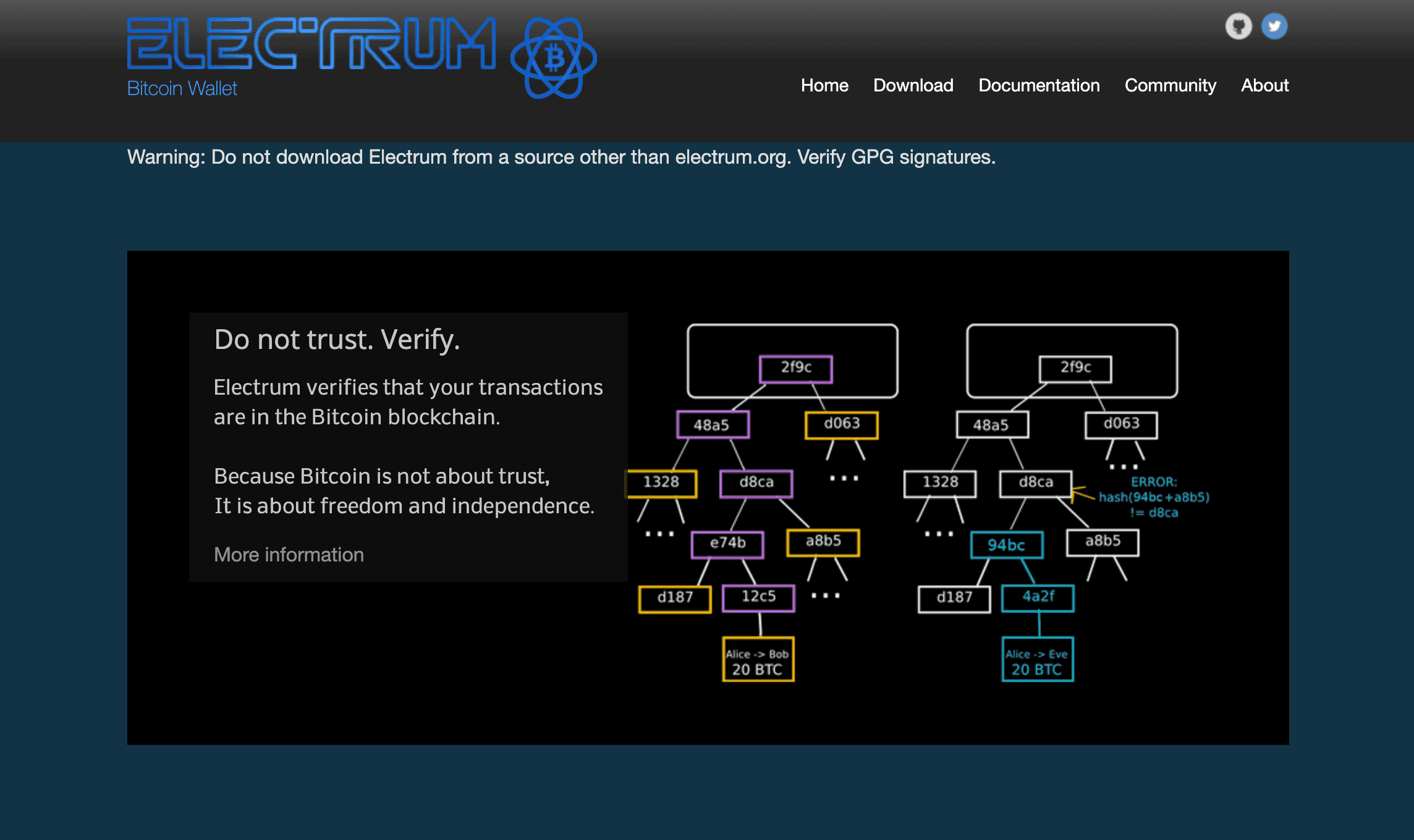
- Assets Supported: Bitcoin-focused
- Hot or Cold: Cold Storage
- Cost: Transaction/network fees
Top Features
- Open-source Bitcoin wallet
- Multisig permissions
- Integrations with top hardware wallets (e.g., Ledger, Trezor, and KeepKey)
- Built-in 2FA support for additional protection
- Encrypted private keys and proof checking
| Pros | Cons |
|---|---|
| Great for Bitcoin-focused investors | Only focused on Bitcoin |
| Free and open-sourced | Interface may be less intuitive for beginners |
| Integrations with hardware wallets (Ledger, Trezor, and KeepKey) | |
| High security |
Phantom Wallet
- Assets Supported: Networks like Solana, Ethereum, Base, Polygon, and Bitcoin supported
- Hot or Cold: Hot Wallet
- Cost: Fixed 0.1% fee for transactions
Top Features
- Solana-focused but supports many networks (e.g., Ethereum, Base, Polygon, Bitcoin)
- Thousands of tokens and NFTs available to store/swap
- Staking available
- High-level security (including scam detection), non-custodial wallet
- Integration with Ledger
- UX-friendly platform
| Pros | Cons |
|---|---|
| Great for Solana-focused investors | Limited to Ledger as only native hardware integration |
| Excellent usability | |
| Great overview of tokens, search ability, and token management | |
| Staking (Solana and Ethereum) available | |
| Strong security features |
Wallet of Satoshi
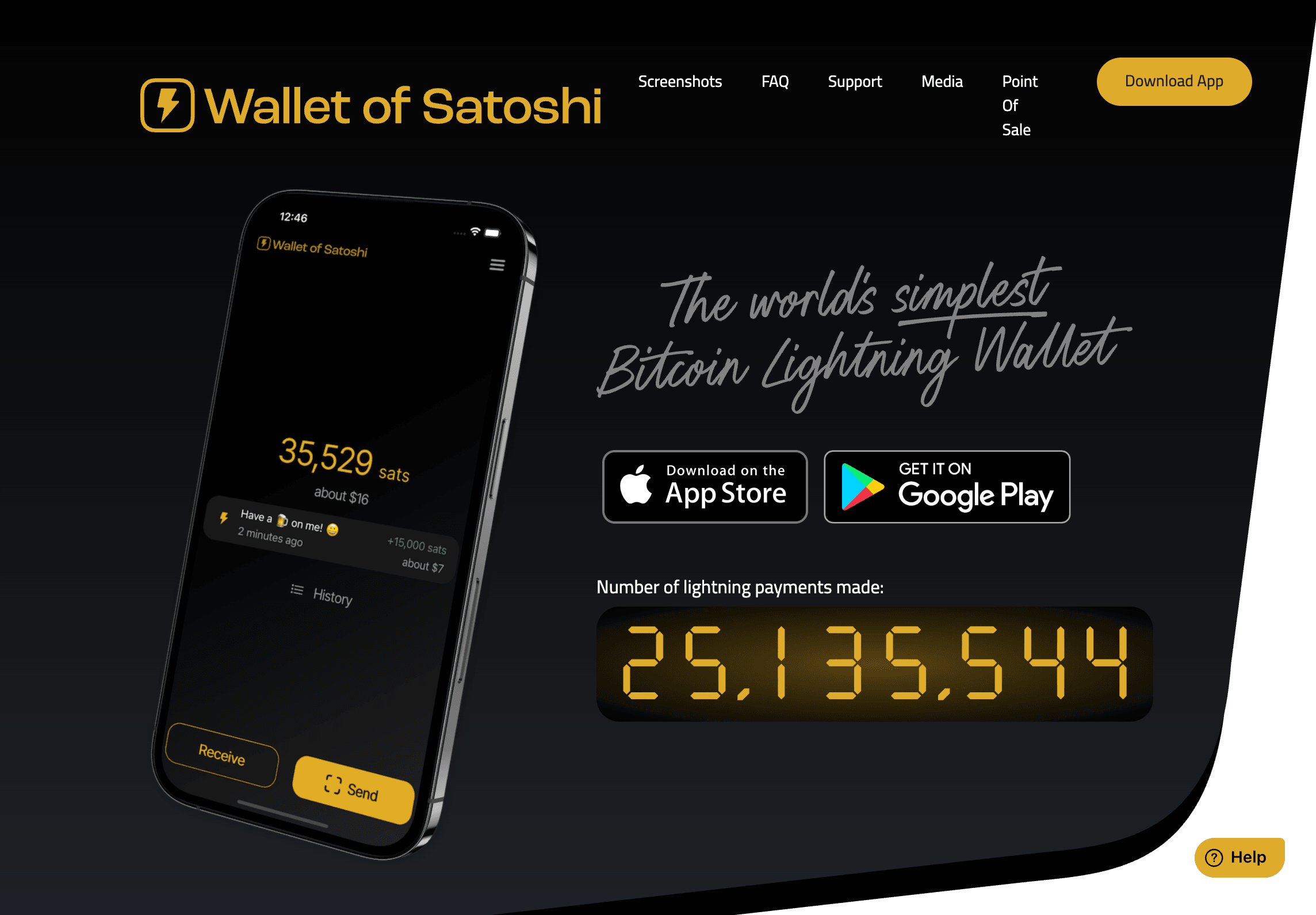
- Assets Supported: Bitcoin-focused (on-chain and Lightning Network).
- Hot or Cold: Custodial Hot Wallet
- Cost: Fixed 1.95% fee for transactions on-chain; no fees when using the Lightning Network; 1.95% fee on Bitcoin deposits
Top Features
- Fast and easy payments with Bitcoin (on-chain and Lightning Network)
- Scan QR code to make Bitcoin payments and top-up options
- Available as a mobile app
- Highly secure
| Pros | Cons |
|---|---|
| Great for Bitcoin investors | Only focused on Bitcoin |
| Fast and easy Bitcoin payments | Lacks additional features |
| Available via app (iOS and Android) | Not a full crypto wallet |
| Great UX |
Trezor
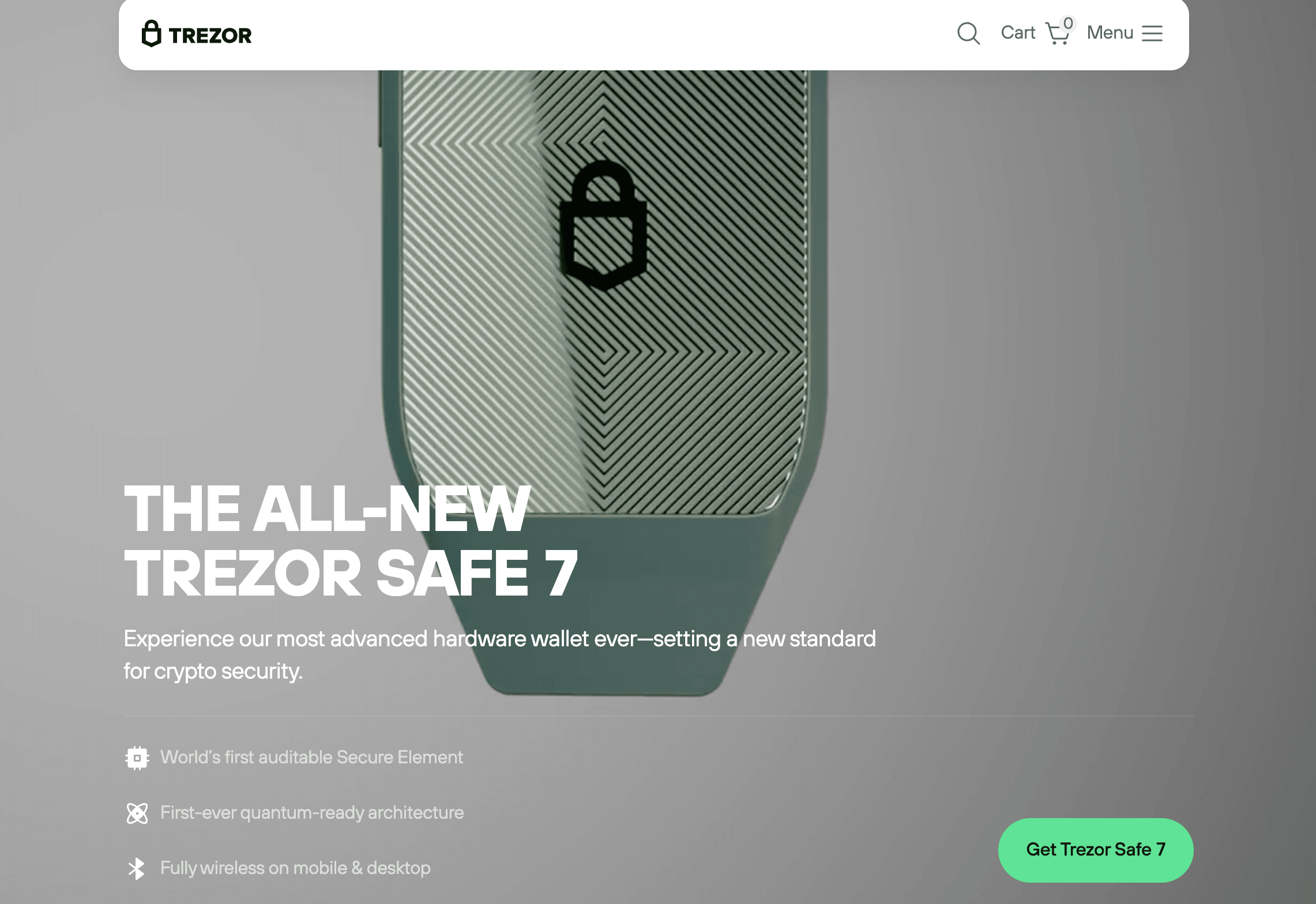
- Assets Supported: Wide range of chains supported (e.g., Bitcoin, Litecoin, Ethereum, Ethereum Classic, Ripple, Dash, Zcash, Dogecoin, Cardano, Solana, Polygon), totaling thousands of assets
- Hot or Cold: Hardware Cold Wallet
- Cost: Transaction fees apply
Top Features
- 3 hardware wallet models available: Model 1, Safe 3, and Safe 5
- Sending/storing/receiving and staking available
- High-tech features to enable usability
- Mobile and desktop platforms
- High compatibility across devices
- All models with premium security features
| Pros | Cons |
|---|---|
| Great for advanced investors who need a solid secure option | High price for Model Safe 5 |
| Advanced features (including staking) across chains | |
| Premium security across models | |
| Model 1 offers a great price/quality ratio for beginners |
Ledger
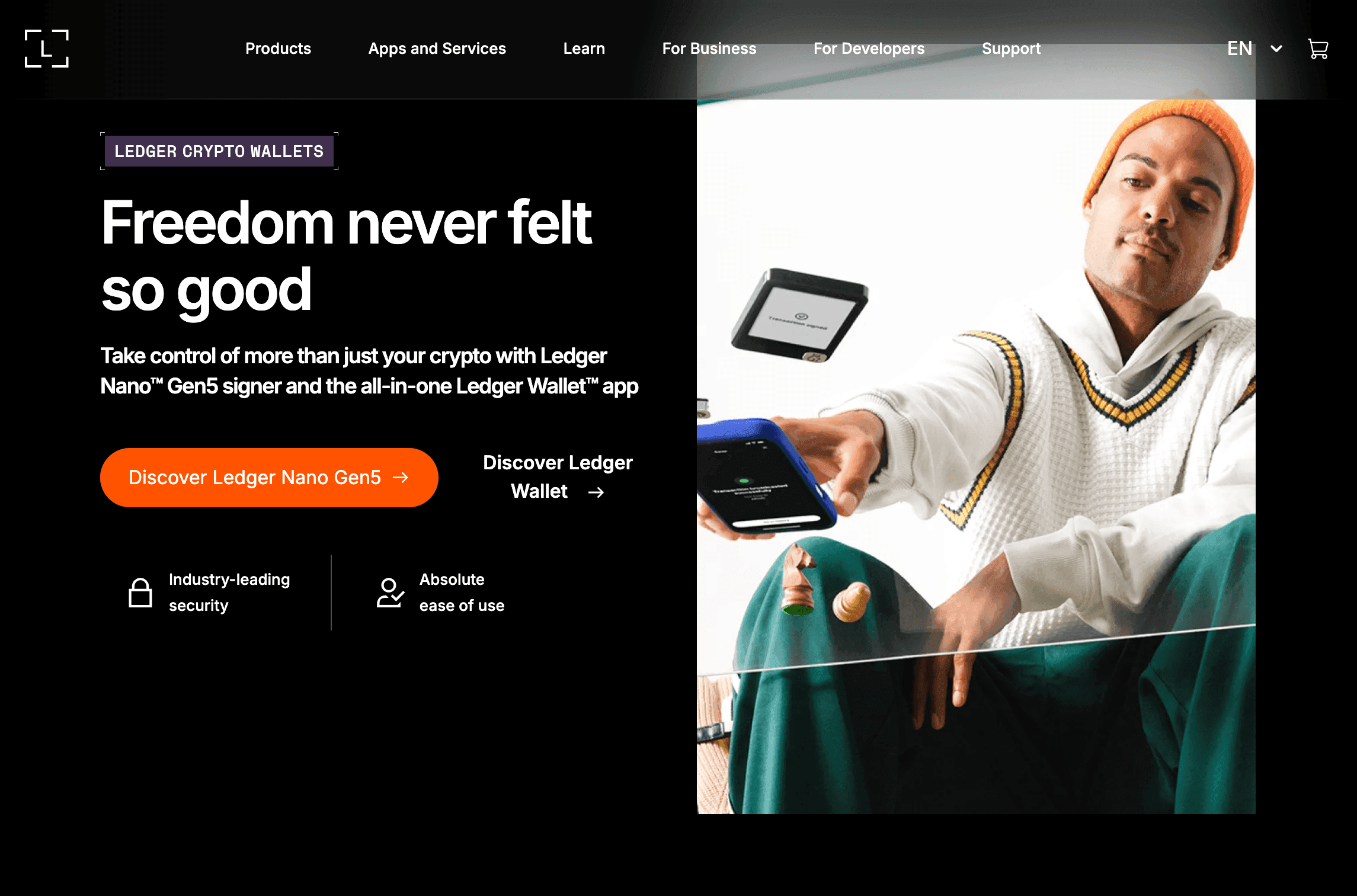
- Assets Supported: 1000+ assets supported across chains
- Hot or Cold: Hardware Cold Wallet
- Cost: Transaction fees apply
Top Features
- 4 hardware wallet models available: Nano X, Nano S Plus, Flex, and Stax
- Support for major cryptocurrencies and thousands of assets
- Support for NFTs and staking
- Touchscreen models (Flex, Stax) for improved usability
- Ledger Recover (never miss access to your wallet again)
- All models with premium security features
| Pros | Cons |
|---|---|
| One of the best options for advanced investors regarding features and security | Higher price for the Flex and Stax models |
| Advanced features available | Ledger Nano S Plus is more expensive than Model 1 from Trezor |
| One of the most reliable crypto wallet providers | |
| Premium security | |
| Cold storage from a robust hardware wallet |
What is a Cryptocurrency Wallet?
A cryptocurrency wallet is a tool that allows users to store, send, and receive assets from blockchain networks. It is an essential tool for individual crypto investors as it securely stores their assets, from Web3 tokens to memecoins, while giving them access to more investment opportunities in the crypto ecosystem like decentralized exchanges, NFT protocols, Web3 games, etc.
Types of Crypto Wallets
There are a few types of crypto wallets in the market, each with key differences in how they store assets, connect to the internet, support networks, and handle transactions. Let's cover the most common types of crypto wallets:
Hot Wallet
A hot wallet (e.g., online wallet) is a crypto wallet that is connected to the internet.
Mobile Wallets
A mobile wallet is an app-based crypto wallet that offers the regular features of a crypto wallet on the go.
Online Wallet
An online wallet is a crypto wallet that is accessed through a web interface or browser extension and is always connected to the internet.
Desktop Wallet
A desktop wallet is still a hot (online) wallet, but its interface is a desktop app instead of an app or website.
Cold Wallet
A cold wallet (i.e., offline wallet) is a type of crypto wallet that is not connected to the internet, usually through an external device, offering higher security.
How do Crypto Wallets Work?
Crypto wallets provide an easy way for you to send/store/receive crypto assets while providing a secure and robust method of authorizing and conducting those transactions. For example, crypto wallets offer users a public key to transfer assets between accounts, along with a private key (visible only to you) that acts like the pin for your phone or bank account, confirming every operation you perform.
How To Choose a Crypto Wallet
To choose a crypto wallet, you first need to identify your current needs and determine which crypto wallet provides the features you need to reach your goals. Those features may include the frequency of crypto purchases/sales, the networks that you want to access in DeFi, and the level of security you're looking for. Let's explore the main criteria for choosing the right crypto wallet:
Security
Different types of crypto wallets offer different levels of security. Cold wallets (such as hardware wallets) are generally more secure than hot wallets (online wallets) because they are not connected to the internet. This makes them a safer choice for long-term storage of your crypto assets.
Assets and Compatibility
A key factor when choosing a crypto wallet is the range of supported blockchain networks and assets. Some wallets are designed for multi-chain support, while others are limited to specific networks. If you're looking for non-EVM chains, this is particularly important.
Costs
Online wallets are usually free to use but some have flat fixed fees for transactions that occur within the wallet (e.g., buying crypto). Keep in mind that blockchain-related network or gas fees apply regardless of the wallet you use. These are not additional charges from the wallet provider. Additional operations like staking may come with extra costs, beyond the cost of purchasing the actual wallet (hardware wallets).
User Experience
Most leading crypto wallets (online and hardware) offer a user-friendly experience, especially online tools like MetaMask and Trust Wallet. While hardware wallets can be slightly more complex to set up, they have made major improvements in usability to support wider adoption.
Features
Crypto wallets may offer additional features like the ability to purchase crypto or stake assets beyond their original purpose (send/store/receive cryptocurrencies).
All Crypto Investments at a Glance
Keep track of your investments with CoinTracking's Portfolio Tracker.
Conclusion: What are the Best Crypto Wallets?
Crypto wallets come in many forms and offer features that go far beyond storing, sending, and receiving crypto assets.
The perfect crypto wallet depends on the frequency of your crypto trading, the networks you use the most, the level of security you're looking for, and the convenience of use you expect.
If you're looking for simplicity, online wallets like MetaMask and TrustWallet are ideal for everyday use. For maximum security, cold storage options like Trezor or Ledger are the preferred choices for long-term holders.
CoinTracking supports the most popular crypto wallets, online and offline, enabling investors to import their trades, determine gains/income, and generate compliant tax reports.
Get a CoinTracking account today:
Disclaimer: All the information provided above is for informational purposes only and should not be considered as professional investment, legal, or tax advice. You should conduct your own research or consult with a professional financial advisor when investing.