Do you want to trade crypto without giving away your personal info? Today, we will show you the top 12 No KYC crypto exchanges, explain their advantages and restrictions, and what KYC actually is.
Key Takeaways
No KYC crypto exchanges offer a great way for investors to remain private and anonymous when trading crypto.
Governments can enforce KYC rules on crypto providers depending on the country and investors still need to track their trades for tax purposes.
The best No KYC crypto exchanges are MEXC, dYdX, Bybit, Uniswap, PancakeSwap and Changelly.
CoinTracking can help you track your gains/losses and income from operating on No KYC exchanges like MEXC, Uniswap, dYdX, Changelly, PancakeSwap, and more!
The Best Crypto Tax Calculator!
Calculate your crypto taxes with ease and generate meticulously optimized tax reports.
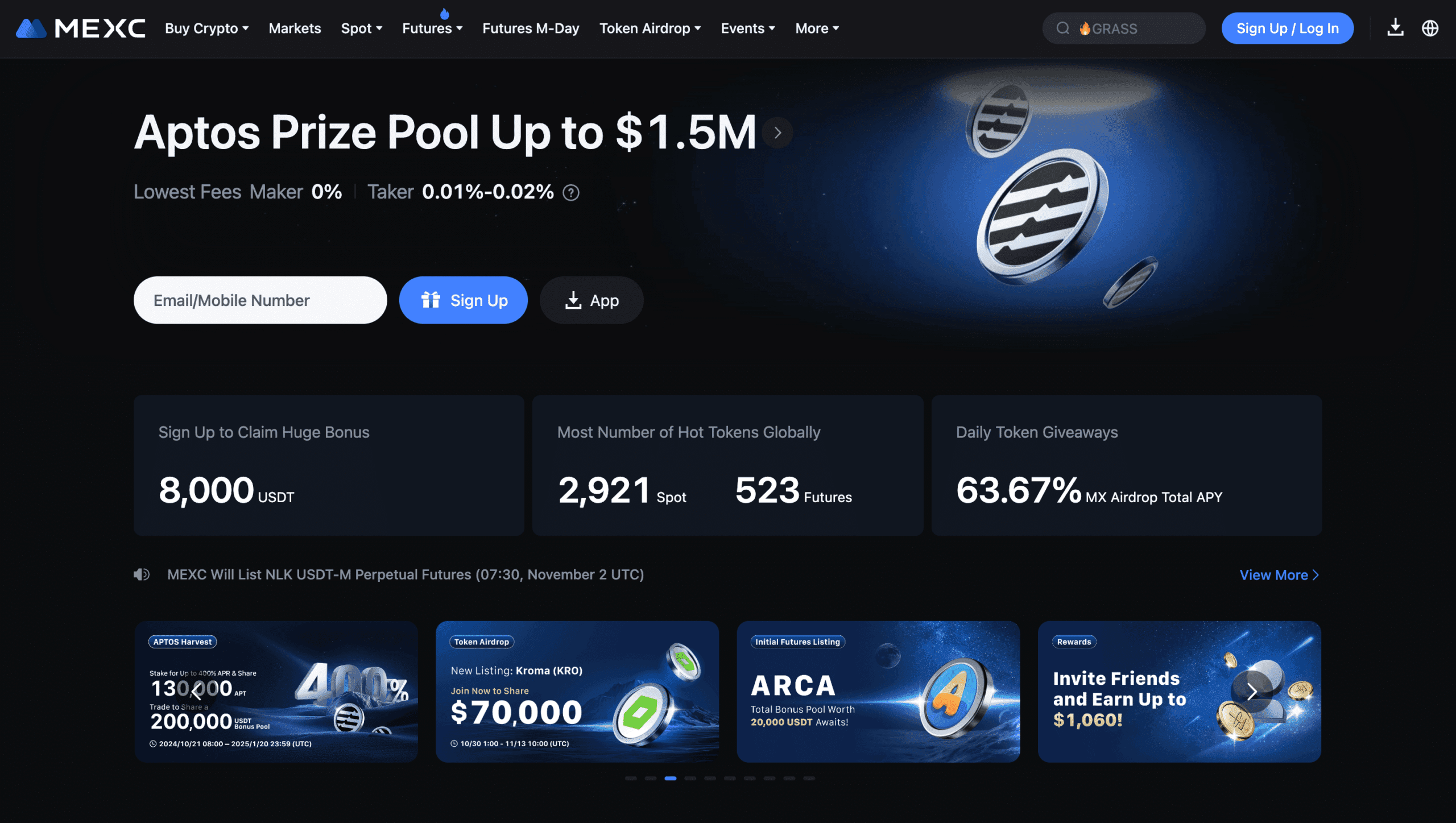
MEXC
MEXC
Trading Fees: Spot and Futures: Maker: 0.000%; Taker: 0.020%
Coins: Over 2,300 coins
Card Purchases: Via Debit/Credit Card through third-parties
Suitable For: All kinds of investors, including advanced ones and passive investors
Location Restrictions: North Korea, Cuba, Sudan, Syria, Iran, Crimea, Mainland China, Indonesia, Singapore, Venezuela, the United States, and Canada
No KYC Features: Spot, margin, and futures trading without KYC; deposits and withdrawals (up to a limit)
Top Features
Wide range of coins: MEXC supports over 2,300 cryptocurrencies to trade.
Low fees: MEXC offers very low trading fees on spot trading.
Security: Established exchange with security record.
Trade types: MEXC offers spot, futures, and margin trading on several coins
Pros
Cons
Wide range of markets
Some countries restricted like the US and Canada
Usability
Established exchange in the market
Payment methods, including crypto/debit card
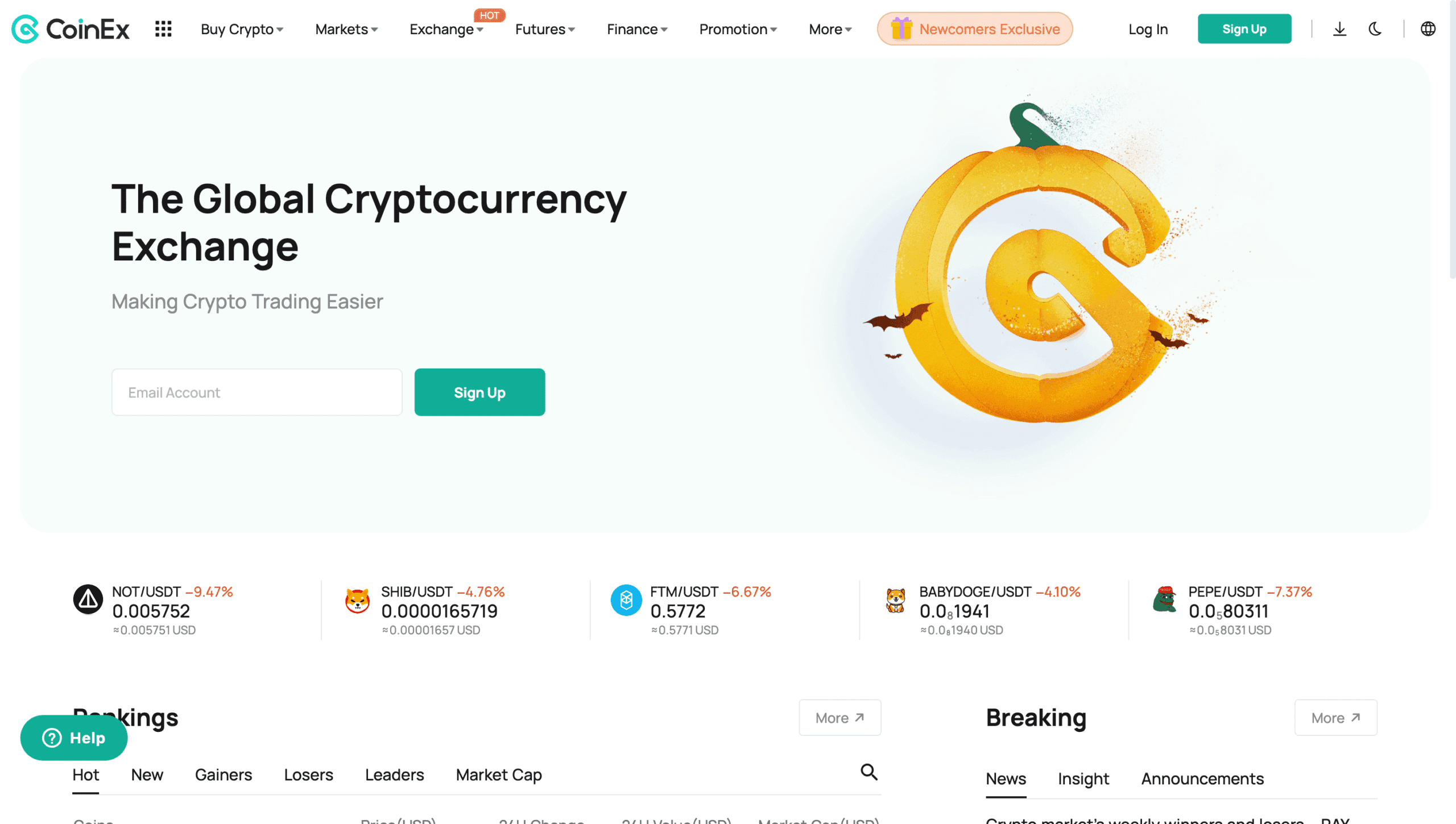
CoinEx
CoinEx
Trading Fees: Up to 0.2% on spot trading
Coins: Over 500 coins
Card Purchases: Yes, through third-party parties
Suitable For: All kinds of investors
Location Restrictions: China, the United States, and the province of Alberta, Canada
No KYC Features: Spot and futures trading without KYC; deposits and withdrawals (up to a limit) without KYC
Top Features
Wide range of assets: Over 700 cryptocurrencies available
Trades: Futures trading beside spot markets
Other services: Beyond trading, CoinEx offers services like crypto loans
Usability: Easy-to-use platform
Pros
Cons
Wide range of coins
Not available for US customers
Several transaction types (including Futures trading)
More crypto services (e.g., loans)
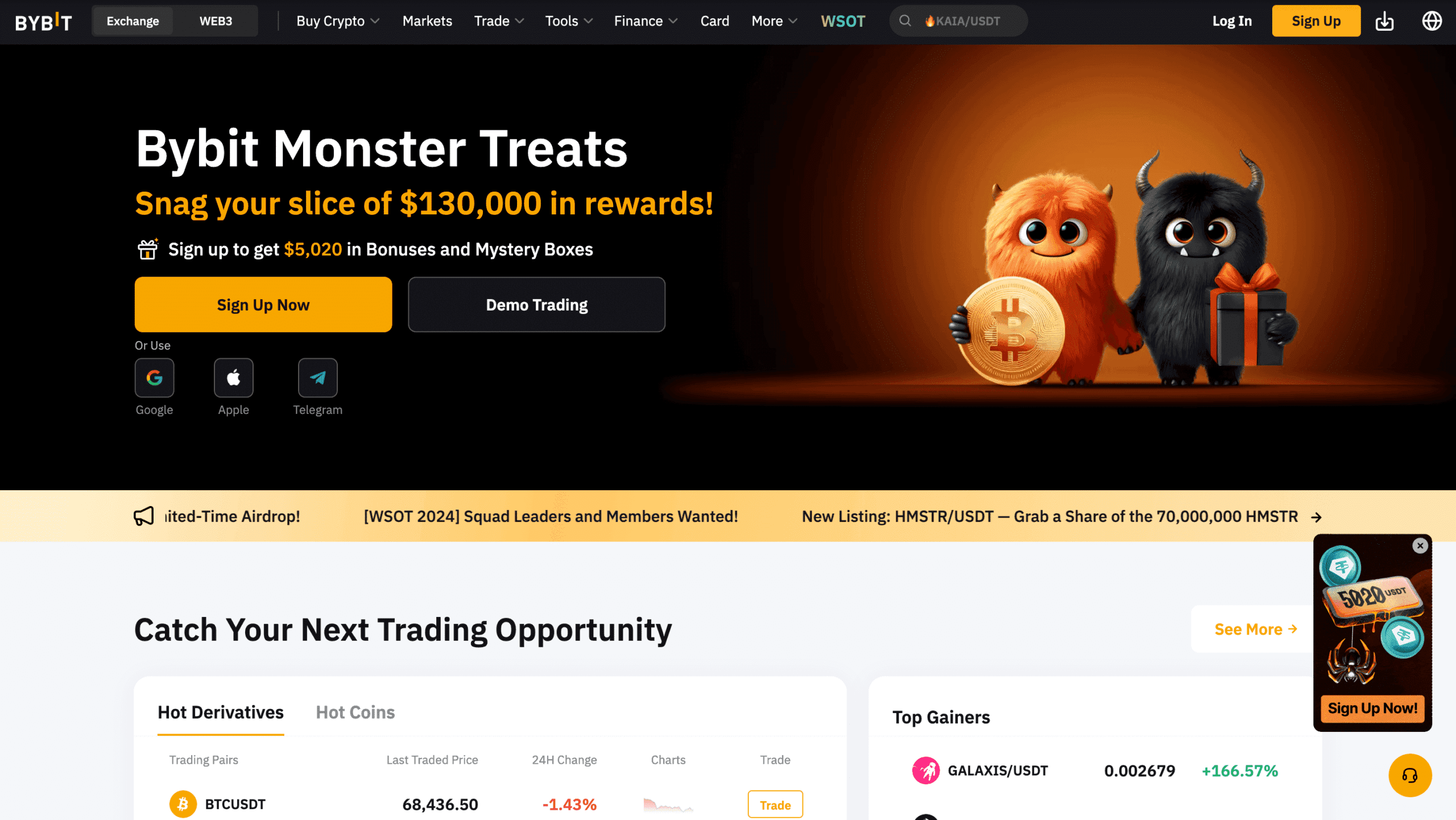
Bybit
Bybit
Trading Fees: Up to 0.1% on spot trading; up to 0.055% on perpetual and futures contracts
Coins: Over 400 coins
Card Purchases: Yes
Suitable For: Intermediate to advanced investors
Location Restrictions: US, UK, mainland China, Singapore, Canada, North Korea, Cuba, Iran, Uzbekistan, and Russian-controlled regions of Ukraine
No KYC Features: Only crypto withdrawals (Daily Limit ≤20K USDT; Monthly Limit ≤100K USDT)
Top Features
Trading: From spot trading to derivatives
More options: Bybit offers more services than other exchanges like ETP trading, trading bot, and OTC trading
Earn: Earn crypto rewards while Bybit also offers crypto loans
Card: Bybit offers a crypto card for purchases
Pros
Cons
A lot of trading options
Restricted in main crypto economies like the US, the UK, China, and Canada
Futures and derivatives trading
Not many operations available for non-KYC users
Interest-earning vehicles
Crypto card for payments
PrimeXBT
PrimeXBT
Trading Fees: 0.02% on crypto futures
Coins: Top market cap cryptocurrencies (over 35 assets)
Card Purchases: Yes, through third-parties
Suitable For: Investors looking to trade only top cryptocurrencies and with high leverage
Location Restrictions: US (including islands), Algeria, American Samoa, Cuba, Ecuador, Iran, Israel, Japan, Myanmar, North Korea, Russian Federation, Sudan, Syria, Saint Vincent and the Grenadines, and New Zealand
No KYC Features: Trading and other operations (up to certain limits)
Top Features
Focus on leveraged trading
Liquidity across markets for top cryptocurrencies
Other features like copy trading
More assets available for future trading like Forex, commodities, and indices
Pros
Cons
A lot of options for leveraged trading
Fewer coins supported than other options
Focused on top coins, aiming for more liquidity in these markets
More assets available beyond crypto like Forex, Indices, and commodities
A lot of leverage options for Bitcoin trading
Bisq
Bisq
Trading Fees: 1.3% (0.15% by maker and 1.15% by taker) for BTC; 0.65% (0.075% by maker and 0.575% by taker) for BSQ
Coins: Mostly Bitcoin
Card Purchases: No
Suitable For: Bitcoin investors
Location Restrictions: None
No KYC Features: All operations (including Bitcoin trading)
Top Features
Focus on Bitcoin trading
Decentralized exchange with open source code base and full privacy to users
No identity required for trading
DAO-based governance
Pros
Cons
Decentralized exchange offering full control to users
Bitcoin focused
Bitcoin focus, with a roadmap to improve the platform
Privacy and anonymity (availability across countries)
DAO-based governance
Hodl Hodl
Hodl Hodl
Trading Fees: 0.5% to 0.6%
Coins: Only Bitcoin
Card Purchases: No
Suitable For: People who want to buy Bitcoin in a peer-to-peer marketplace
Location Restrictions: None
No KYC Features: Bitcoin buying and selling
Top Features
Focus on Bitcoin trading
Peer-to-peer marketplace offering privacy
P2P lending option (stablecoins) to earn interest available
No identity required for buying and selling
Pros
Cons
Bitcoin focused peer-to-peer marketplace
Only Bitcoin focused
Lending option available
Issues related to peer-to-peer marketplaces
Available across countries
Uniswap
Uniswap
Trading Fees: 0.3%
Coins: 600+ cryptocurrencies
Card Purchases: Yes
Suitable For: All types of investors, Ethereum gem hunters
Location Restrictions: Belarus, Cuba, Iran, North Korea, Syria, Ivory Coast, Liberia, Sudan, Zimbabwe, Iraq, and Iran
No KYC Features: All features due to being a DEX
Top Features
Swap thousands of tokens with great usability
Trading, earning, liquidity pools, and NFTs available
High liquidity across markets
Community-led governance through the UNI token
Pros
Cons
Leading Ethereum-based DEX in the world
Beginner investors don't have as much access due to high Ethereum gas fees
Trade thousands of cryptocurrencies
Only Ethereum-focused
High security
Liquidity pools and NFTs available
The UNI token
User-friendly platform
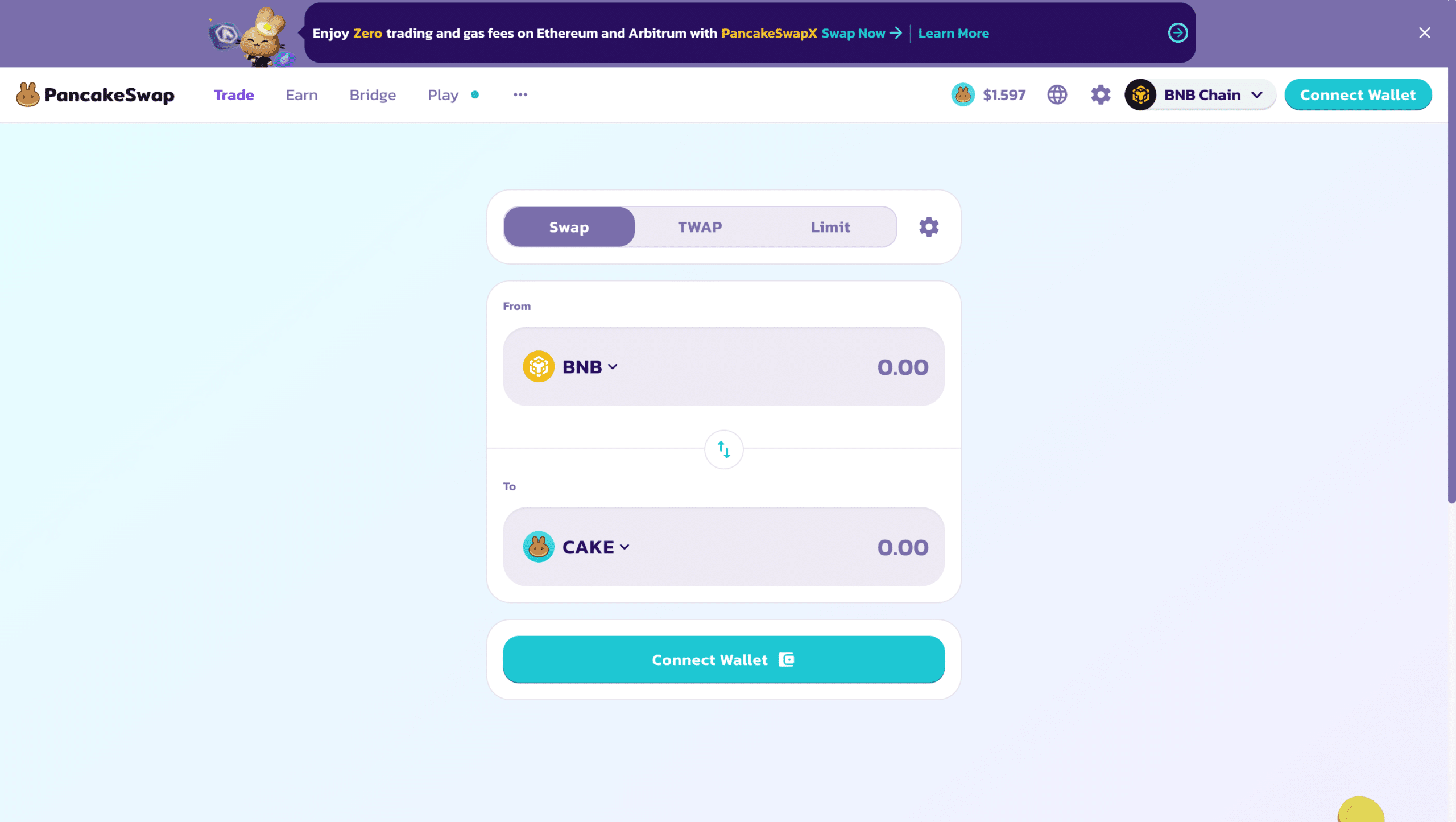
PancakeSwap
PancakeSwap
Trading Fees: 0.02% for makers and 0.07% for takers
Coins: Over 2,000 tokens (focus on BSC coins)
Card Purchases: Yes, through third-parties
Suitable For: Binance ecosystem gem hunters
Location Restrictions: Cuba, Iran, Zimbabwe, Iraq, Crimea, Syria, Sudan, Belarus and the Democratic Republic of Congo
No KYC Features: All features due to being a DEX
Top Features
Many trading options, from leverage trading to staking
Support for NFTs
Thousands of coins available
Low costs
Leading native token (CAKE) and community
Pros
Cons
A DEX offering many trading options
Only BEP-20 coins supported
Thousands of assets available with high liquidity
Low trading costs
High reliability
Community-led governance
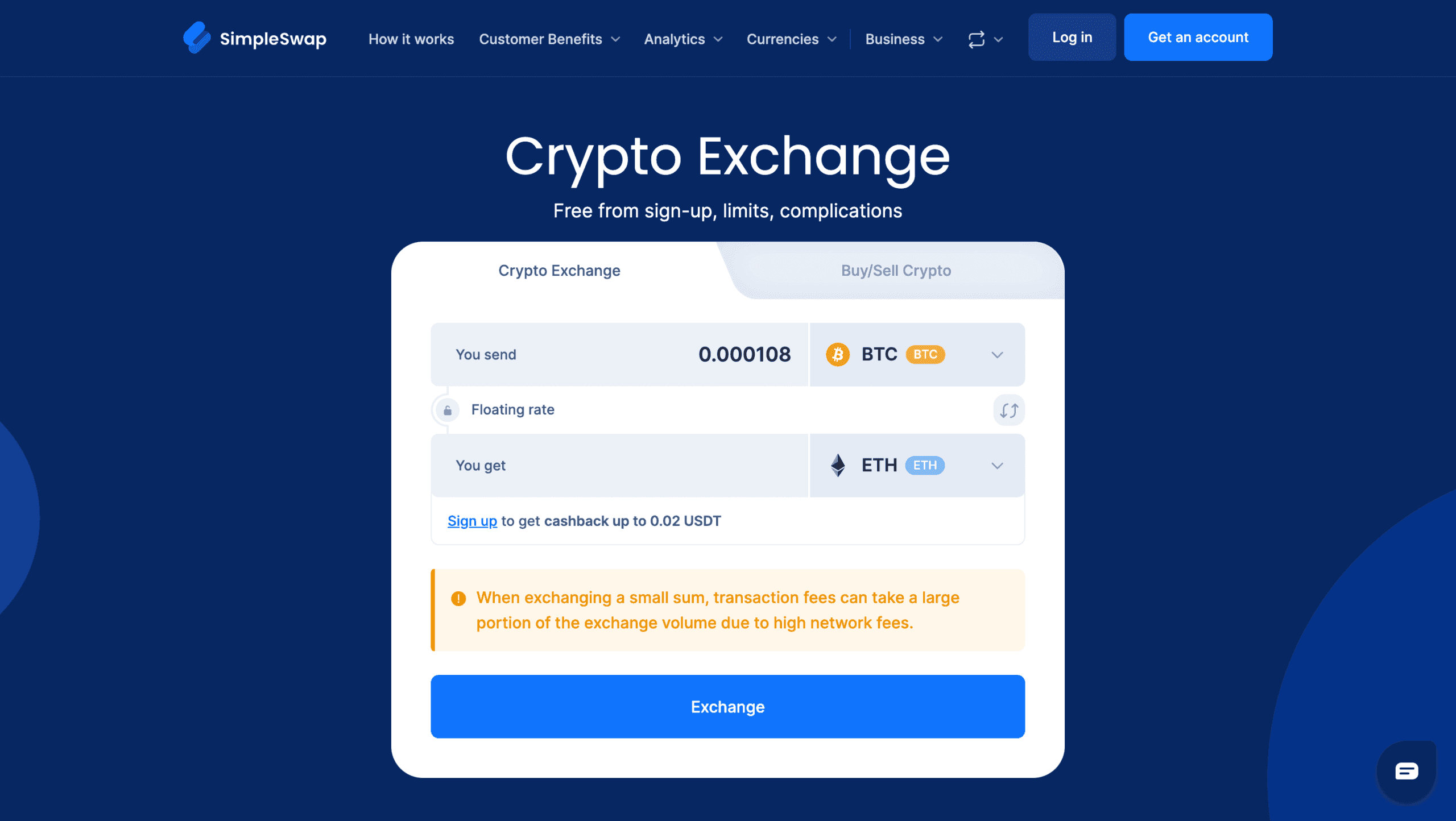
SimpleSwap
SimpleSwap
Trading Fees: 1.21% floating rate
Coins: Over 1,500 cryptocurrencies
Card Purchases: Yes, via a third-party provider
Suitable For: Beginner investors
Location Restrictions: China, Bangladesh, Colombia, Cuba, Morocco, Pakistan, Saudi Arabia and Venezuela, Japan, and the US
No KYC Features: Trading
Top Features
Wide range of cryptocurrencies
Simple usability to convert cryptocurrencies
No identity required to operate
Pros
Cons
Simple to use
Lack of other trading options (e.g., leverage)
A lot of cryptocurrencies available
Not available in key crypto markets
No identity required to convert
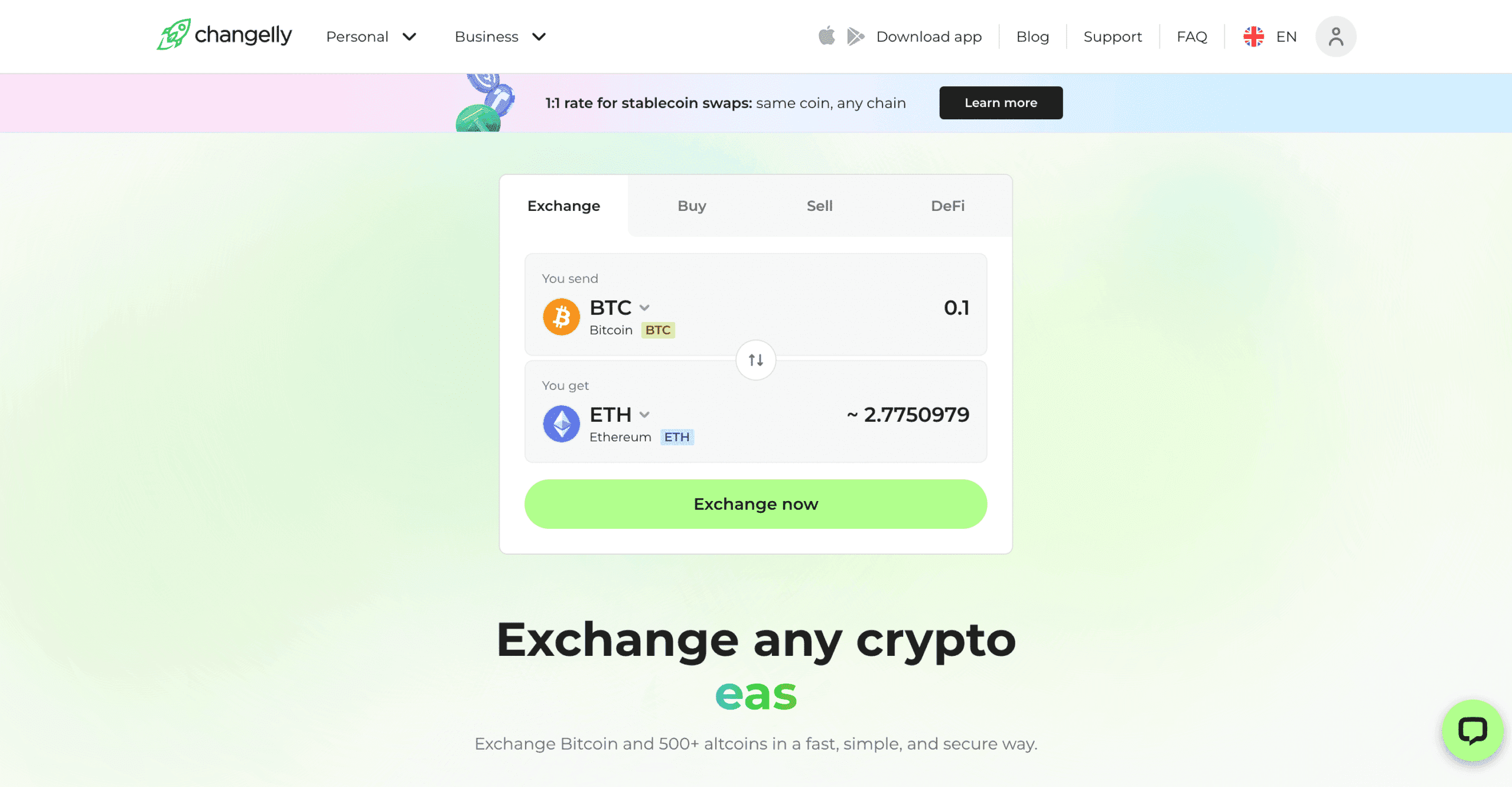
Changelly
Changelly
Trading Fees: 0.25% trading fee + withdrawal fees (rate depends on the coin)
Coins: Over 150 cryptocurrencies
Card Purchases: Yes (Mastercard/Visa)
Suitable For: Beginner investors
Location Restrictions: Cuba, Iran, North Korea, Crimea, Sudan, Syria, the US, US Virgin Islands, Bangladesh, and Bolivia
No KYC Features: Most features (including trading), excluding FIAT-to-crypto purchases
No pro trading features (e.g., transaction types, margin trading)
DeFi-ready with prices from 100+ decentralized exchanges
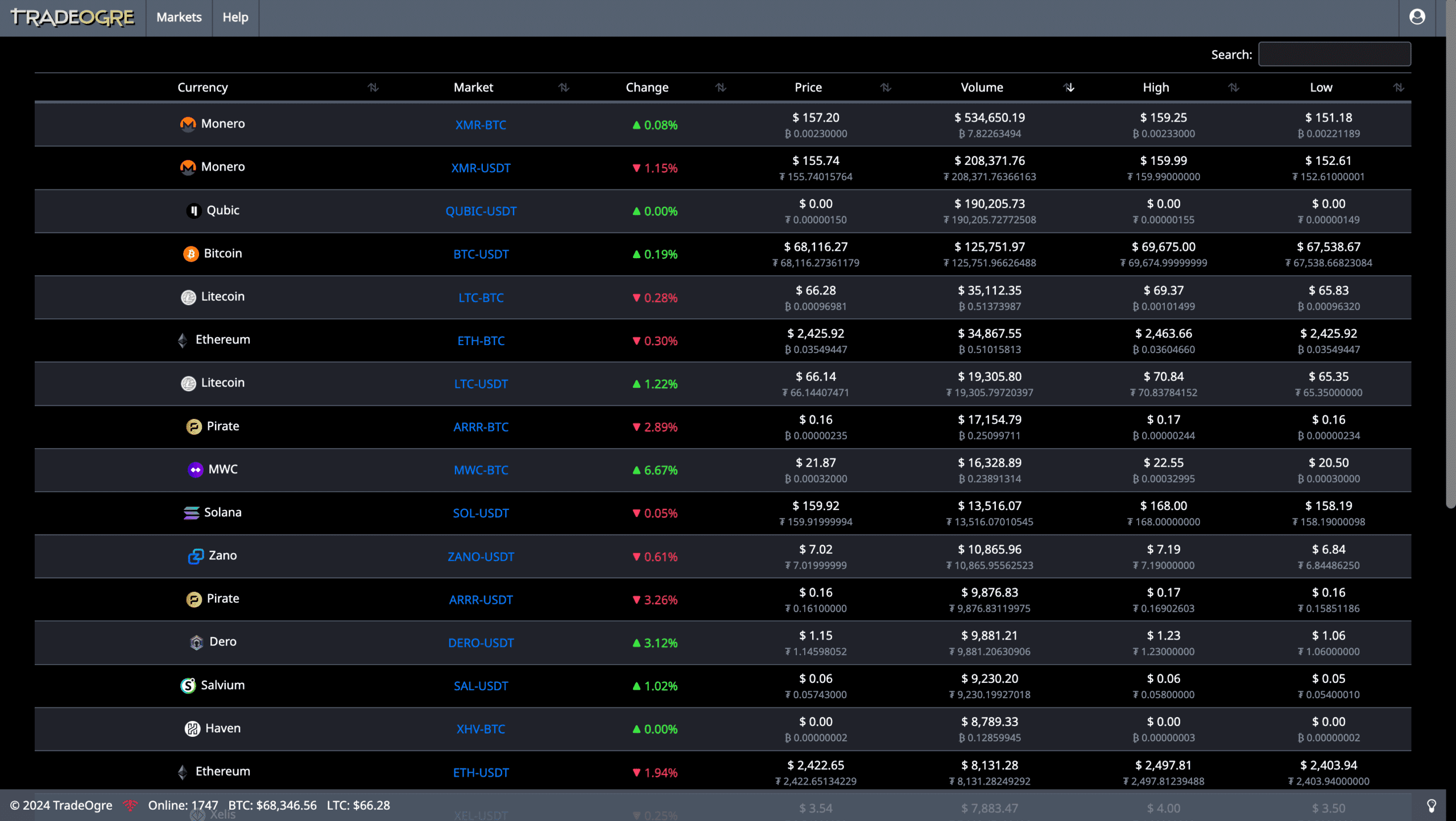
TradeOgre
TradeOgre
Trading Fees: 0.2% trading fee
Coins: Over 150 cryptocurrencies
Card Purchases: No
Suitable For: Investors looking for privacy coins
Location Restrictions: None
No KYC Features: All operations including trading
Top Features
BTC, USDT, and LTC markets available
Low trading fees
Decentralized exchange
Pros
Cons
Non-KYC decentralized exchange for some crypto markets
Lack of usability
Available across countries
Not enough coins supported
No pro trading features (e.g., transaction types, margin trading)
Pionex
Pionex
Trading Fees: 0.05% (spot), 0.1% (leveraged tokens), and up to 0.05% (Futures)
Coins: Over 379 cryptocurrencies
Card Purchases: Yes
Suitable For: Beginners and professional investors
Location Restrictions: US (have to use Pionex.us) and other countries
No KYC Features: Trading
Top Features
Several transaction types available
Hundreds of coins supported
Low trading fees
More products (e.g., loans, earning vehicles, rebates)
Pros
Cons
Several cryptocurrencies available
Can be complex for beginner investors
Many trading options available, from spot to margin trading
US customers have to use Pionex.us
Earning vehicles
Buying crypto with card/bank transfer
Many products, from earning to crypto loans
Low trading fees
Do I have to report my transactions on no KYC crypto exchanges?
Depending on the crypto tax code in your country, you may need to determine the gains/losses on your crypto trades, regardless of the exchange where you traded on. This applies to countries like the US whether you traded on a centralized, decentralized, or Non-KYC exchange.
What is KYC?
KYC refers to Know-Your-Customer, a series of procedures for companies to know more about the people they are serving in efforts to reduce illicit activities, from money laundering to financing terrorism.
Why use a non-KYC exchange?
The appeal of a non-KYC exchange relies on investors having the ability to remain private and anonymous while using a crypto service like an exchange.
Are non-KYC exchanges safe?
Non-KYC exchanges, especially decentralized exchanges offer a safe way for investors to conduct crypto transactions based on their decentralized technology. However, there are cases of players, offering no KYC, that may not be the most trustworthy options.
Will the government crackdown on non-KYC exchanges?
The government can target non-KYC exchanges as more regulations and new laws are passed to track crypto investors across countries, from the US to the EU. More established exchanges are instituting KYC requirements to safeguard investors and protect themselves from a potential government action. This trend could apply, over time, to exchanges that currently don't have KYC processes.
Your Tax Declaration – With one Click
Generate fast and detailed tax reports for your crypto investments and optimize your tax strategy.
Conclusion on the Best Non KYC Exchange?
Non-KYC exchanges offer privacy and anonymity for investors looking to trade crypto, from spot to leveraged markets. The best No KYC crypto exchanges offer a lot of trading options and security while remaining decentralized at nature, including Uniswap, Pionex, PancakeSwap, MEXC, and ByBit. CoinTracking can help investors track all of their trades from No KYC exchanges and more options (e.g., centralized, decentralized, and KYC exchanges).
Disclaimer: All the information provided above is for informational purposes only and should not be considered as professional investment, legal, or tax advice. You should conduct your own research or consult with a professional financial advisor when investing.
Luis is a crypto tax expert, webinar host, and content creator at CoinTracking. He helps traders and investors navigate cryptocurrency taxation with practical, real-world guidance.
FAQs about 12 Best No KYC Crypto Exchanges
You can buy Bitcoin (BTC) using credit cards on exchanges that do not require KYC verification or in peer-to-peer marketplaces that also don't require it.
There are several exchanges, depending on the location, that offer no KYC verification, enabling customers to remain anonymous.
Binance requires customers to go through identity verification, in several levels depending on your trading volume and other factors (e.g., withdrawals).
Yes, you can buy crypto on exchanges and services that do not require customers to go through KYC verification.
The IRS can employ blockchain forensics tools to track transactions conducted on non-KYC exchanges if they are unable to enforce legal actions on exchanges to share customer info.